Top Technology Trends That Will Shape the Next Five Years
Technology is evolving faster than ever before. Innovations that once seemed futuristic are now becoming part of everyday life, changing how we work, communicate, shop, travel, and run businesses. Over the next five years, several emerging technologies are expected to transform industries, create new career opportunities, and improve the way people live.

From Artificial Intelligence (AI) and cloud computing to quantum computing and smart cities, these advancements will continue to influence healthcare, education, finance, manufacturing, transportation, and entertainment.
In this guide, we’ll explore the top technology trends expected to shape the next five years and explain why they matter for businesses and individuals.
Why Technology Trends Matter
Keeping up with technology helps individuals and businesses stay competitive and prepared for future changes.
Benefits include:
- Better productivity
- Faster communication
- Improved customer experiences
- Lower operating costs
- Greater innovation
- Enhanced cybersecurity
- Smarter business decisions
- New career opportunities
Understanding future trends allows businesses to adapt before competitors do.
1. Artificial Intelligence (AI) Will Become Even More Powerful
Artificial Intelligence is expected to remain one of the biggest technology trends over the next decade.
AI is already helping people:
- Automate repetitive tasks
- Analyze data
- Create content
- Improve customer support
- Detect fraud
- Personalize online experiences
In the coming years, AI will become more integrated into workplaces, healthcare, education, and everyday devices.
Expected Growth
- Smarter AI assistants
- Better business automation
- Faster software development
- Improved language translation
- More personalized services
AI will continue supporting human work rather than replacing every job.
2. Generative AI Will Transform Content Creation
Generative AI creates new content such as:
- Articles
- Images
- Videos
- Music
- Computer code
- Marketing materials
Businesses are increasingly using generative AI to improve productivity and speed up creative workflows.
Expected uses include:
- Customer support
- Product design
- Software development
- Education
- Marketing campaigns
Human review will remain important for quality and accuracy.
3. Cloud Computing Will Continue to Expand
Cloud computing allows businesses to store data and run applications online instead of relying on local servers.
Benefits include:
- Lower IT costs
- Remote access
- Easy collaboration
- Better scalability
- Automatic software updates
- Improved disaster recovery
Small businesses and large enterprises alike are expected to increase cloud adoption.
4. Cybersecurity Will Become More Important
As cyber threats become more sophisticated, organizations will invest more in digital security.
Key cybersecurity trends include:
- AI-powered threat detection
- Zero Trust security models
- Multi-factor authentication
- Identity protection
- Cloud security
- Ransomware prevention
Individuals will also need stronger online security habits to protect personal information.
5. Internet of Things (IoT) Will Connect More Devices
The Internet of Things refers to everyday devices connected to the internet.
Examples include:
- Smart home systems
- Wearable fitness devices
- Connected vehicles
- Smart appliances
- Industrial equipment
- Medical monitoring devices
These connected devices will improve automation, convenience, and efficiency.
6. 5G and Future Wireless Networks
High-speed mobile networks will continue improving connectivity.
Benefits include:
- Faster downloads
- Lower latency
- Better video calls
- Improved online gaming
- Smarter cities
- Enhanced connected vehicles
Future wireless technologies will support billions of connected devices worldwide.
7. Quantum Computing
Quantum computing is still developing but has the potential to solve highly complex problems much faster than traditional computers.
Possible applications include:
- Drug discovery
- Scientific research
- Financial modeling
- Climate simulations
- Logistics optimization
- Advanced encryption research
Although widespread adoption may take time, significant progress is expected over the next several years.
8. Automation and Robotics
Automation is becoming more common across many industries.
Robots now assist with:
- Manufacturing
- Warehousing
- Agriculture
- Healthcare
- Food production
- Logistics
Future robots will become more accurate, efficient, and capable of working alongside people.
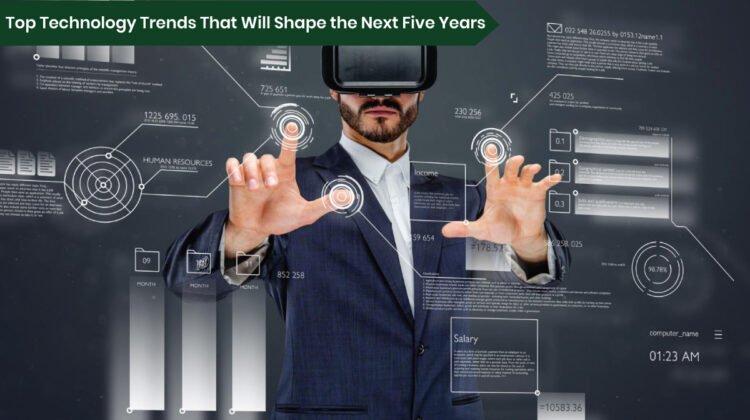
9. Extended Reality (XR)
Extended Reality includes:
- Virtual Reality (VR)
- Augmented Reality (AR)
- Mixed Reality (MR)
These technologies are expanding beyond gaming into:
- Employee training
- Medical education
- Product design
- Remote collaboration
- Retail shopping
- Real estate tours
Businesses are finding new ways to create immersive customer experiences.
10. Sustainable Technology
Technology is playing a growing role in reducing environmental impact.
Examples include:
- Energy-efficient data centers
- Smart power grids
- Electric vehicles
- Renewable energy management
- Carbon tracking software
- Green manufacturing
Sustainability is becoming a major priority for businesses worldwide.
11. Edge Computing
Edge computing processes data closer to where it is created instead of sending everything to distant cloud servers.
Benefits include:
- Faster response times
- Reduced network congestion
- Better reliability
- Improved performance for connected devices
Edge computing is especially useful for IoT devices and real-time applications.
12. Blockchain Beyond Cryptocurrency
Blockchain technology is finding new uses beyond digital currencies.
Potential applications include:
- Supply chain tracking
- Digital identity verification
- Healthcare records
- Smart contracts
- Financial services
- Secure voting systems
Businesses are exploring blockchain for greater transparency and efficiency.
13. Personalized Healthcare Technology
Healthcare technology is becoming more personalized through:
- AI-powered diagnostics
- Wearable health monitors
- Remote patient monitoring
- Digital health records
- Predictive analytics
These innovations help improve patient care and support earlier detection of health issues.
14. Smart Cities
Cities are increasingly using technology to improve public services.
Smart city initiatives include:
- Intelligent traffic management
- Smart street lighting
- Waste management systems
- Public safety monitoring
- Environmental sensors
- Energy-efficient infrastructure
These systems aim to improve quality of life while reducing resource consumption.
15. Low-Code and No-Code Development
Businesses want software development to be faster and more accessible.
Low-code and no-code platforms allow users to build applications with minimal programming knowledge.
Benefits include:
- Faster development
- Lower costs
- Greater business flexibility
- Increased productivity
These tools help organizations respond quickly to changing business needs.
Industries That Will Be Most Affected
Technology will transform nearly every industry.
Major areas include:
Healthcare
- AI-assisted diagnostics
- Remote healthcare
- Personalized treatments
Education
- Online learning
- AI tutoring
- Virtual classrooms
Finance
- Fraud detection
- Digital payments
- Automated financial services
Retail
- Personalized shopping
- Smart inventory management
- AI customer service
Manufacturing
- Robotics
- Automation
- Predictive maintenance
Transportation
- Connected vehicles
- Smarter logistics
- Traffic optimization
Skills That Will Be Valuable in the Future
As technology advances, demand for digital skills will continue growing.
Important skills include:
- Artificial Intelligence
- Data analysis
- Cybersecurity
- Cloud computing
- Programming
- Digital marketing
- UX/UI design
- Critical thinking
- Problem-solving
- Communication
Combining technical knowledge with human skills will become increasingly valuable.
Challenges of Emerging Technologies
Despite their benefits, new technologies also create challenges.
These include:
- Data privacy concerns
- Cybersecurity risks
- Ethical use of AI
- Workforce reskilling
- Regulatory compliance
- High implementation costs
- Digital inequality
- Environmental impact of technology infrastructure
Organizations will need responsible policies and ongoing education to address these issues.
How Businesses Can Prepare
To stay competitive over the next five years, businesses should:
- Invest in employee training.
- Strengthen cybersecurity.
- Explore AI and automation opportunities.
- Move suitable workloads to the cloud.
- Monitor emerging technologies.
- Improve digital customer experiences.
- Develop long-term technology strategies.
- Stay flexible and open to innovation.
Businesses that adapt early are often better positioned for future growth.
Frequently Asked Questions
Which technology will have the biggest impact in the next five years?
Artificial Intelligence is expected to have one of the greatest impacts across industries by improving automation, decision-making, customer service, healthcare, education, and business productivity.
Will AI replace human jobs?
AI is likely to automate certain repetitive tasks, but it is also expected to create new roles and change existing jobs. Many positions will continue to require human creativity, judgment, leadership, and interpersonal skills.
Why is cybersecurity becoming more important?
As businesses and individuals rely more on digital services, cyber threats continue to evolve. Strong cybersecurity helps protect personal information, financial data, business systems, and customer trust.
What industries will benefit the most from new technology?
Healthcare, finance, education, manufacturing, retail, transportation, and logistics are expected to experience significant improvements through AI, cloud computing, automation, and connected technologies.
How can individuals prepare for future technology trends?
Learning digital skills, staying informed about emerging technologies, practicing good cybersecurity habits, and being open to continuous learning can help individuals adapt to future changes in the workplace and everyday life.
Technology Trends at a Glance
| Technology Trend | Expected Impact |
| Artificial Intelligence | Automation, productivity, personalization |
| Generative AI | Content creation, coding, customer support |
| Cloud Computing | Remote work, scalability, lower IT costs |
| Cybersecurity | Better protection against digital threats |
| Internet of Things (IoT) | Connected homes, healthcare, industry |
| 5G Networks | Faster connectivity and lower latency |
| Quantum Computing | Scientific research and complex problem-solving |
| Robotics & Automation | Manufacturing, logistics, healthcare |
| Extended Reality (XR) | Training, education, entertainment |
| Sustainable Technology | Energy efficiency and environmental protection |
| Edge Computing | Faster processing for connected devices |
| Blockchain | Secure transactions and data management |
Conclusion
The next five years will bring rapid technological advancements that reshape how people live, work, and do business. Artificial Intelligence, cloud computing, cybersecurity, automation, quantum computing, and connected devices are expected to become even more integrated into everyday life, creating new opportunities for innovation and growth.
For individuals, staying informed and developing digital skills will be essential in a changing job market. For businesses, embracing emerging technologies, investing in cybersecurity, and adapting to evolving customer expectations can provide a strong competitive advantage. Those who prepare today will be better equipped to succeed in the technology-driven future.