
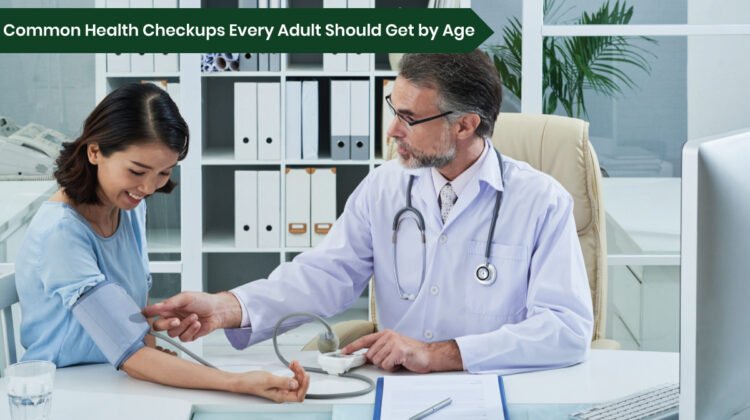
Common Health Checkups Every Adult Should Get by Age
Many serious health conditions develop quietly without noticeable symptoms. High blood pressure, diabetes, high cholesterol, osteoporosis, and even some cancers may not cause warning signs until they have progressed. That’s why regular health checkups are one of the best ways to protect your long-term health.

Preventive screenings help detect potential problems early, when treatment is often easier, less expensive, and more effective. Whether you’re in your 20s or your 60s, getting the right health checkups at the right time can help you stay healthier and live longer.
This guide explains the most important health checkups adults should consider at every stage of life.
Why Are Regular Health Checkups Important?
Routine health screenings help identify health risks before they become serious.
Benefits include:
- Detect diseases early
- Monitor chronic health conditions
- Lower the risk of complications
- Improve treatment success
- Track changes in your health over time
- Encourage healthier lifestyle choices
- Provide peace of mind
Preventive care is often more effective than treating advanced illness.
Health Checkups Every Adult Should Get
Regardless of age, most adults should discuss these routine health checks with their healthcare provider.
Blood Pressure Check
High blood pressure is often called the “silent killer” because it usually has no symptoms.
A blood pressure check helps detect:
- Hypertension
- Heart disease risk
- Stroke risk
- Kidney disease risk
Healthy adults should have their blood pressure checked regularly, or more often if recommended by a healthcare provider.
Cholesterol Test
A cholesterol test measures:
- Total cholesterol
- LDL (bad cholesterol)
- HDL (good cholesterol)
- Triglycerides
High cholesterol increases the risk of:
- Heart disease
- Heart attack
- Stroke
Your doctor may recommend testing more frequently if you have risk factors such as diabetes, obesity, or a family history of heart disease.
Blood Sugar Test
A blood glucose or HbA1c test helps detect:
- Prediabetes
- Type 2 diabetes
Early diagnosis allows you to make lifestyle changes before serious complications develop.
Body Mass Index (BMI) and Weight
Monitoring your weight helps identify changes that could affect your health.
Maintaining a healthy weight lowers the risk of:
- Diabetes
- Heart disease
- High blood pressure
- Sleep apnea
- Joint problems
Waist circumference may also be measured because excess abdominal fat increases health risks.
Eye Examination
Regular eye exams do more than check your vision.
They can also detect:
- Glaucoma
- Cataracts
- Macular degeneration
- Diabetic eye disease
- High blood pressure changes
- Certain neurological conditions
Adults who wear glasses, have diabetes, or have a family history of eye disease may need more frequent exams.
Dental Checkups
Visit your dentist regularly for:
- Professional cleaning
- Cavity detection
- Gum disease screening
- Oral cancer screening
Good oral health is closely linked to overall health, including heart health.
Skin Examination
Check your skin regularly for:
- New moles
- Changing moles
- Unusual spots
- Persistent sores
A dermatologist can evaluate suspicious changes that may indicate skin cancer or other skin conditions.
Mental Health Screening
Mental health is just as important as physical health.
Talk with your healthcare provider if you experience:
- Anxiety
- Depression
- Sleep problems
- Chronic stress
- Mood changes
Early support can improve quality of life and overall well-being.
Health Checkups by Age
Health Checkups in Your 20s
Your 20s are the ideal time to build healthy habits and establish a baseline for your health.
Recommended checkups include:
- Annual physical exam
- Blood pressure screening
- Weight and BMI assessment
- Vision test
- Dental exam
- Mental health screening
- Sexual health screening if appropriate
- Vaccination review
If you have a family history of diabetes or heart disease, your doctor may recommend earlier blood sugar or cholesterol testing.
Health Checkups in Your 30s
Many chronic conditions begin developing during this decade.
Recommended screenings:
- Blood pressure
- Cholesterol test
- Blood sugar screening
- Eye exam
- Dental checkups
- Skin examination
- Mental health assessment
- Thyroid evaluation if symptoms are present
Women should also discuss cervical cancer screening and breast health with their healthcare provider.
Men should talk about any family history of prostate disease or heart disease.
Health Checkups in Your 40s
The risk of chronic diseases increases during your 40s.
Important screenings include:
- Annual physical exam
- Blood pressure
- Cholesterol
- Diabetes screening
- Eye examination
- Hearing assessment if needed
- Colorectal cancer screening based on individual risk and current guidelines
- Breast cancer screening for women, following age and risk-based recommendations
- Cervical cancer screening for eligible women
- Skin cancer examination
Lifestyle habits become increasingly important during this stage.
Health Checkups in Your 50s
Preventive screenings become even more important after age 50.
Discuss these with your healthcare provider:
- Blood pressure
- Cholesterol
- Diabetes screening
- Colorectal cancer screening
- Bone density test for women at appropriate ages or earlier if at higher risk
- Vision and hearing tests
- Vaccination updates
- Skin examination
Men may also discuss prostate health based on personal risk factors and current medical guidance.
Health Checkups After Age 60
Older adults often benefit from more frequent monitoring.
Common checkups include:
- Annual physical exam
- Blood pressure
- Diabetes screening
- Cholesterol
- Bone density assessment
- Hearing evaluation
- Vision examination
- Fall risk assessment
- Memory and cognitive evaluation
- Depression screening
- Medication review
Maintaining independence and quality of life becomes an important focus.
Women’s Health Screenings
Women should discuss these screenings with their healthcare provider based on age and personal risk.
Common screenings include:
- Cervical cancer screening (Pap test and/or HPV testing)
- Breast cancer screening
- Bone density testing after menopause or earlier if at increased risk
- Pregnancy-related care when applicable
- Reproductive health examinations
Family history may change when these screenings should begin.
Men’s Health Screenings
Men should consider discussing:
- Blood pressure
- Cholesterol
- Diabetes screening
- Testicular health awareness
- Prostate health discussions based on age and family history
- Colorectal cancer screening
Your doctor will recommend testing based on your individual health profile.
Vaccinations Adults Should Stay Current With
Preventive care also includes staying up to date with recommended vaccines.
Talk to your healthcare provider about:
- Annual flu vaccine
- COVID-19 vaccination if recommended
- Tetanus booster
- Shingles vaccine for eligible adults
- Pneumococcal vaccine for eligible adults
- Hepatitis vaccines if indicated
Recommendations may vary depending on age, health conditions, occupation, and travel.
Healthy Habits That Support Preventive Care
Health checkups work best when combined with healthy lifestyle choices.
Build these habits into your routine:
- Eat a balanced diet
- Exercise regularly
- Sleep 7–9 hours each night
- Stay hydrated
- Avoid smoking
- Limit alcohol
- Manage stress
- Maintain a healthy weight
- Protect your skin from excessive sun exposure
- Follow your doctor’s advice for ongoing conditions
Warning Signs You Should Never Ignore
Do not wait for your next routine checkup if you experience:
- Chest pain
- Difficulty breathing
- Sudden vision changes
- Severe headaches
- Blood in urine or stool
- Unexplained weight loss
- Persistent fatigue
- New lumps or swelling
- Ongoing abdominal pain
- Unusual bleeding
Seek prompt medical attention if you notice these symptoms.
Frequently Asked Questions
How often should adults get a general health checkup?
Many adults benefit from an annual wellness visit, but the ideal schedule depends on your age, medical history, and risk factors. Your healthcare provider can recommend the right interval.
At what age should adults start regular health screenings?
Basic screenings such as blood pressure, weight, vision, and dental exams should begin in early adulthood. Other screenings, including cholesterol, diabetes, and cancer screenings, are based on age and personal risk.
Are annual blood tests necessary?
Not everyone needs the same blood tests every year. Your healthcare provider will decide which tests are appropriate based on your health, age, medications, and family history.
Why are preventive screenings important?
They can detect diseases before symptoms appear, allowing earlier treatment and reducing the risk of serious complications.
Can healthy adults skip regular checkups?
Even healthy adults benefit from routine preventive care because many common conditions develop without noticeable symptoms.
Conclusion
Regular health checkups are one of the most effective ways to protect your long-term health. From monitoring blood pressure and cholesterol to age-appropriate cancer screenings and eye exams, preventive care helps identify problems early and supports better treatment outcomes.
The exact tests you need depend on your age, family history, lifestyle, and overall health. Work with your healthcare provider to create a personalized screening schedule, and combine regular checkups with healthy habits like balanced nutrition, physical activity, quality sleep, and stress management. Taking these steps today can help you stay healthier for years to come.